Gene Keys

THE GENE KEYS

The Gene Keys System is, in the words of founder Richard Rudd, a grand synthesis of practical wisdom to help guide you to a deeper understanding of yourself and your true potential. Like a precious treasure map, this website invites you on a journey of self discovery to find the true higher purpose of your life.

Rooted in ancient wisdom and offering a gentle, easy-to-follow path of contemplation, the Gene Keys are an oasis of calm in a fast-paced world. Here you’ll find a journey of self-enquiry that challenges, questions and enlightens you about who you are and why you are.
CREATE YOUR FREE
GENE KEYS PROFILE

Visit the official Gene Keys site here to access your free profile

Together with The Gene Keys book, your Gene Keys Profile is a means of unlocking the enormous potential of your life.

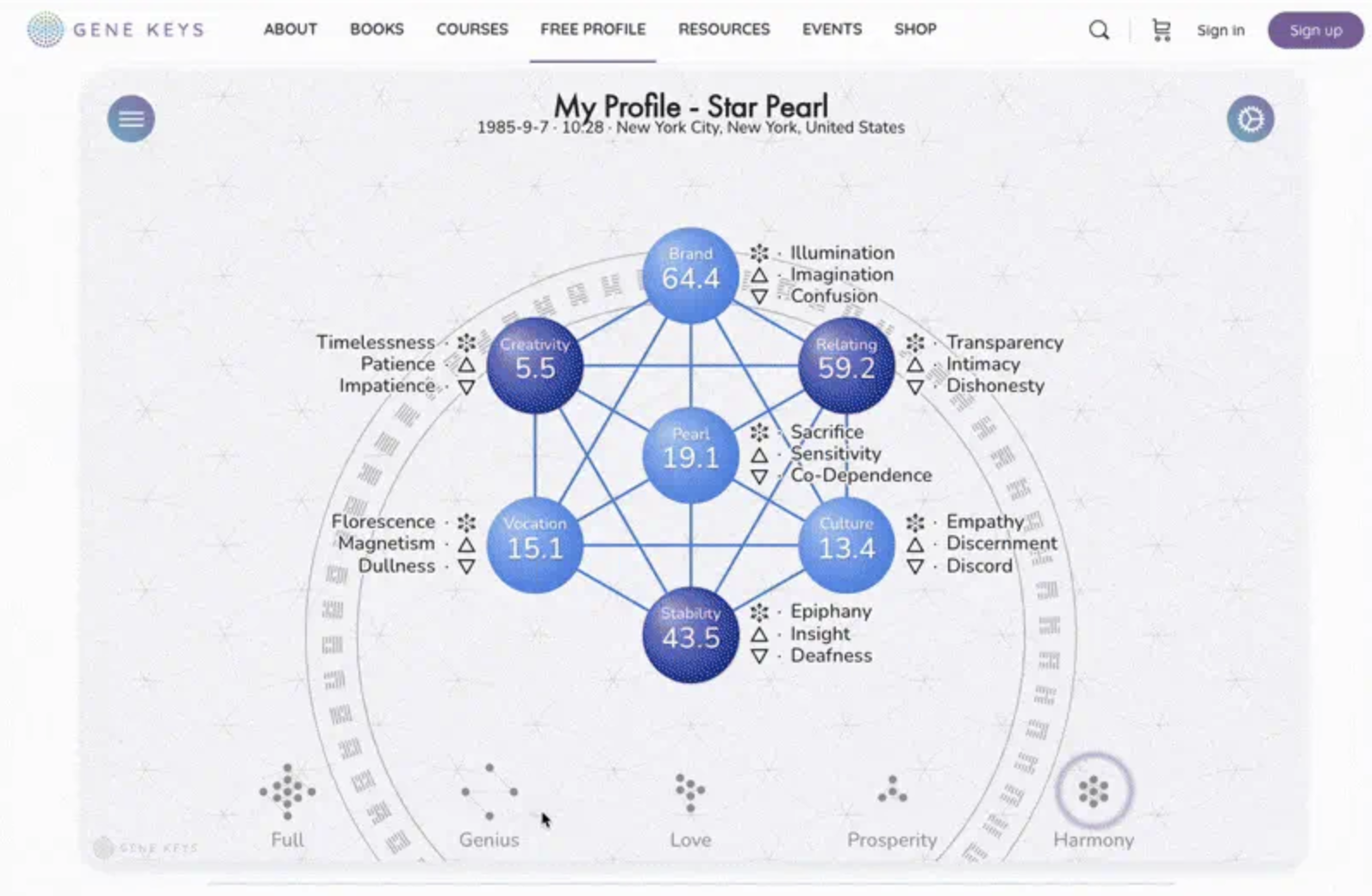
Bringing together astrological calculations and the Chinese I Ching, your Profile is the original blueprint that tells you who you are, how you operate, and above all, why you are here.

For a full understanding of your Profile please explore the Golden Path Program — an easy-to-follow, guided journey of transformation that shows you how to apply this knowledge to your life.

Watch Introduction To The Gene Keys on the free profile page at the official site:
Founder, Richard Rudd
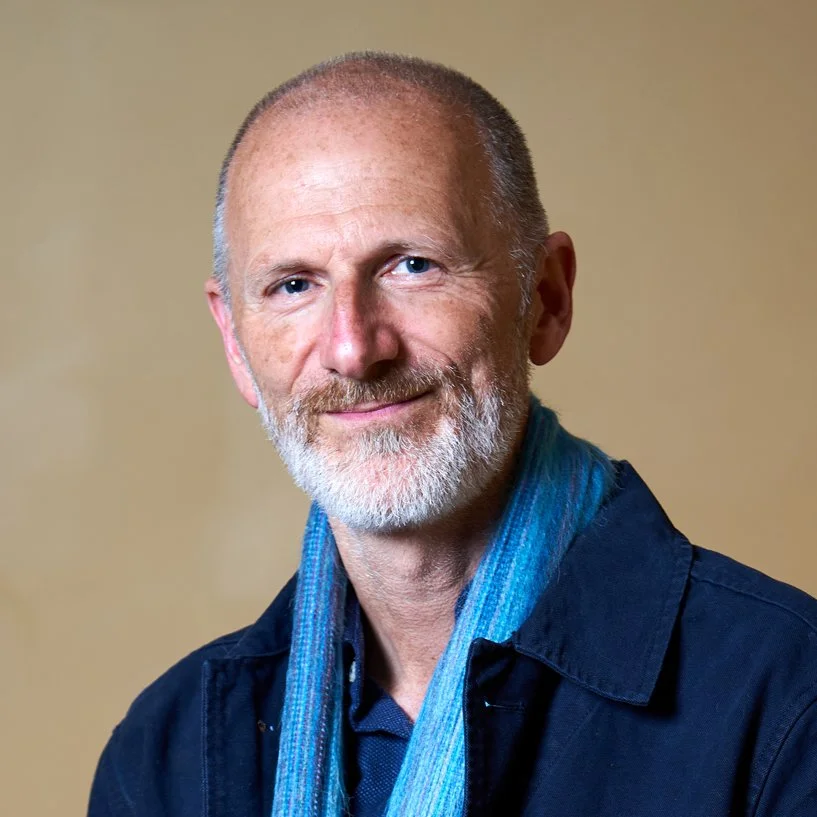
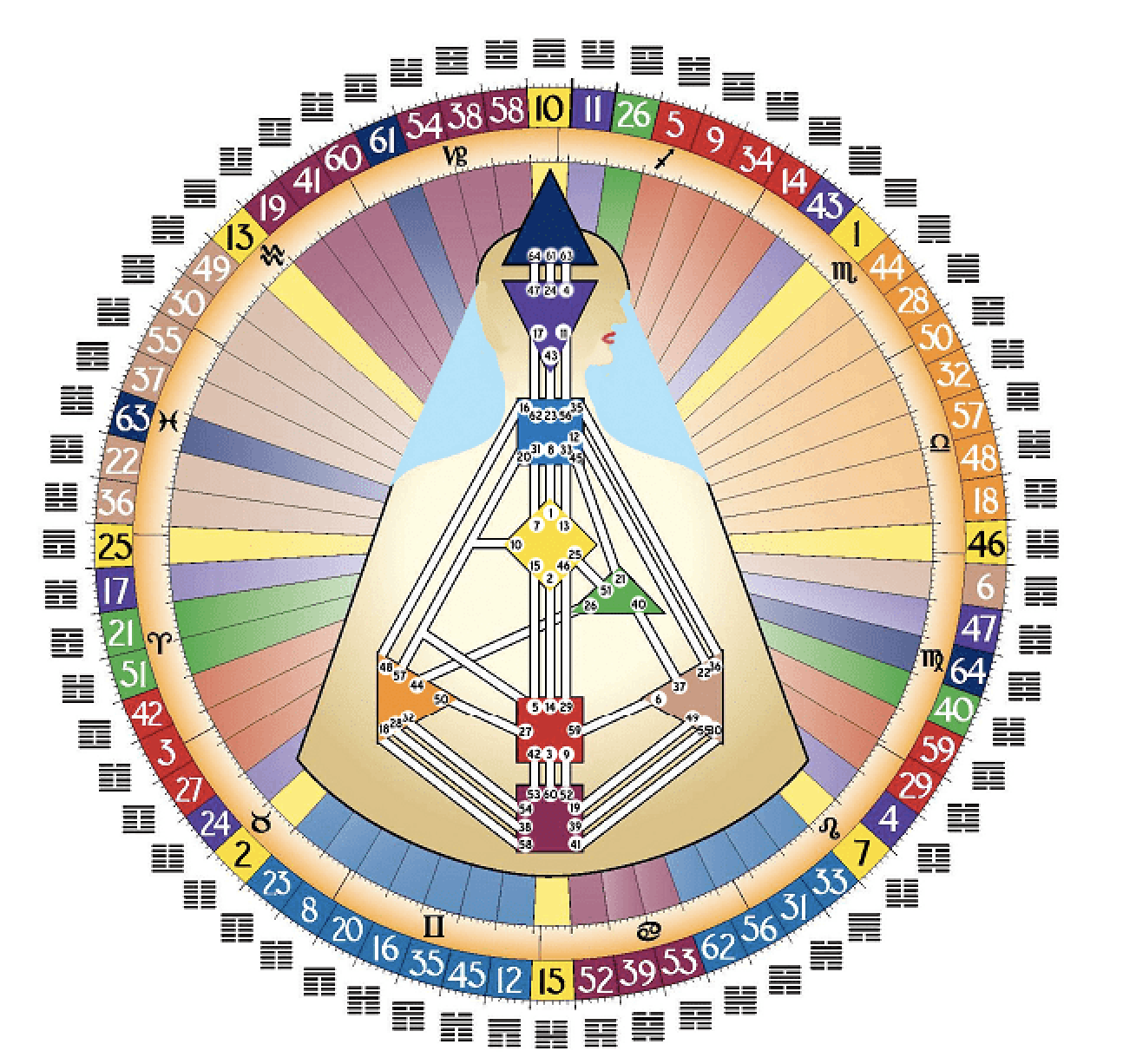
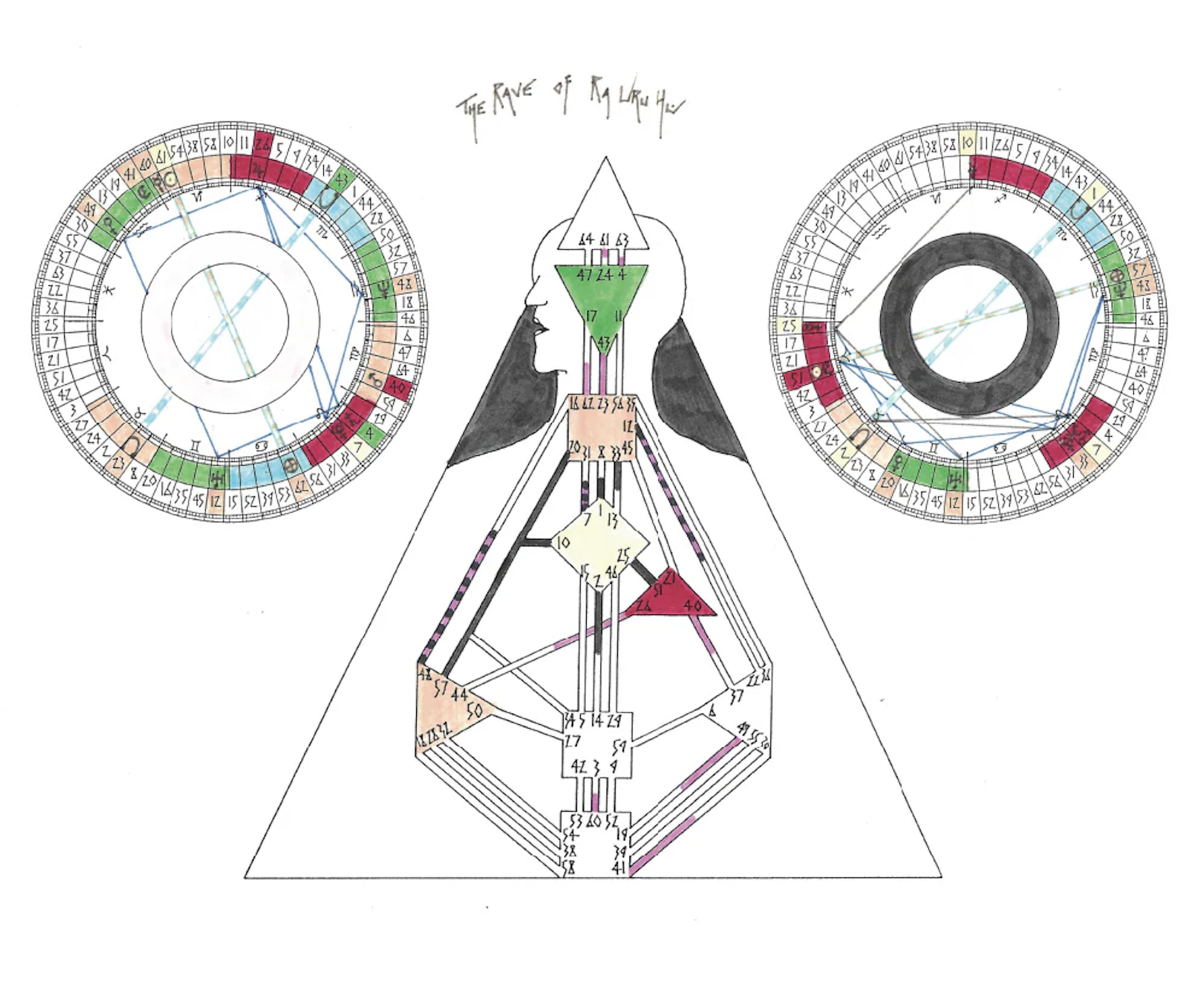
The Gene Keys emerged from Human Design as a deeper, contemplative evolution, developed by Richard Rudd, an early Human Design teacher who experienced a profound mystical event. While Human Design provides the mechanics (your 'map') of how you operate, Gene Keys uses the same 64 I Ching hexagrams but interprets them as a spectrum of human potential (Shadows, Gifts, Siddhis) for personal transformation, focusing more on inner contemplation rather than just daily strategy. Rudd took the 64 genetic archetypes from Human Design and spent years contemplating them, shifting the focus from fixed characteristics to a pathway of unlocking inner wisdom and freedom.
LEARN MORE ABOUT YOUR GENE KEYS

Human Design

HUMAN DESIGN

According to the founder, Ra Uru Hu’s, site, Jovian Archive: Here is a quick overview of information reposted from the Home and About pages. Please visit the site directly to explore more!

“The System of Human Design is a synthesis of ancient wisdom and modern science, combining Astrology, the I Ching, the Hindu-Brahmin Chakra system, and the Kabbalistic Tree of Life with contemporary disciplines like Quantum Physics and Genetics. It provides a practical roadmap for self-discovery, offering tools to align with your authentic nature, make decisions with clarity, and navigate life with less resistance. By decoding your unique energetic blueprint, Human Design reveals your strengths, challenges, and potential, empowering you to live a life of purpose and fulfillment. It’s not about belief—it’s an experiment, a journey into the mechanics of your true self.”


The Human Design System is not a belief system. It is a concrete map to the nature of being.


What Is Human Design?

Human Design is a revolutionary system of self-knowledge and decision-making that synthesizes ancient wisdom and modern science. It offers a practical, mechanical understanding of how you are uniquely designed to operate in the world. Unlike other systems that generalize, Human Design is the science of differentiation—it reveals the specific mechanics of your individuality.

At its core, Human Design is a tool for living as yourself. It provides a map of your genetic blueprint, known as the BodyGraph, which shows how energy flows through your system and how you are designed to interact with the world. This map is calculated using your birth data and incorporates elements from the I’Ching, astrology, Kabbalah, the Hindu-Brahman chakra system, and quantum physics.

“It is a logical way in which we can see ourselves. Just the simple mechanics is enough to make a vast difference in somebody's life.”

How Human Design Works

Human Design is rooted in the mechanics of energy. It shows how energy moves through your system, how you are conditioned by external forces, and how you can align with your true nature. The system is built around key components:

These components work together to reveal your design and provide a framework for living authentically.


Behind Human Design

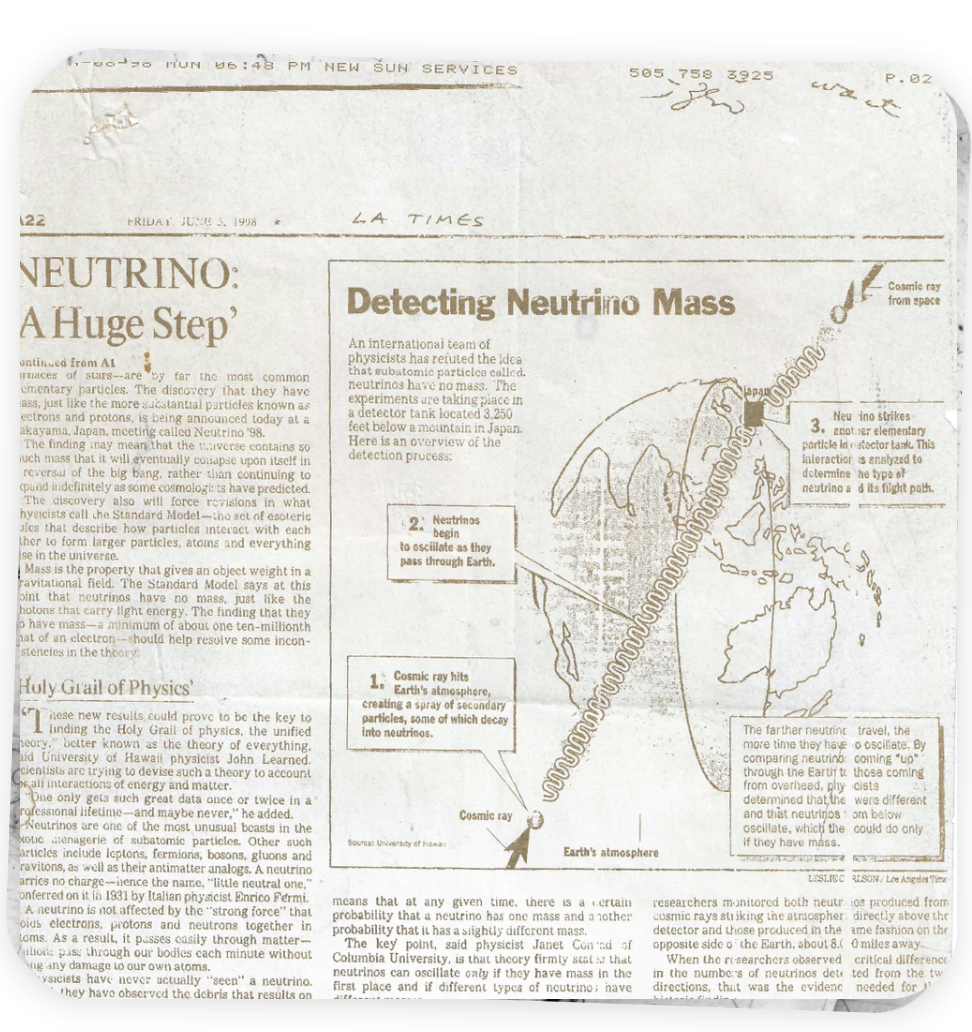
At the heart of the Human Design System lies a groundbreaking scientific discovery: the neutrino. Neutrinos are subatomic particles that carry an infinitesimal amount of mass, and they are the medium through which the consciousness field operates. About 3 trillion neutrinos pass through every square inch of the planet every second, carrying material information as they move.

Our Sun produces approximately 70% of the neutrinos that flow through our solar system, with the remaining 30% coming from other stars and celestial bodies. These particles don’t just pass through us—they interact with us. As they move through our bodies, they leave behind information, imprinting us with the frequencies they carry. This imprinting process, which occurs at the moment of birth, is what forms the foundation of your Human Design Chart.

Why Human Design Matters

Human Design is not a belief system—it’s a practical tool for experimentation. It invites you to test its principles in your own life and see what works for you. By following your Strategy and Authority, you can make decisions that align with your true nature, reduce resistance, and experience greater ease and flow.

This system is particularly relevant in today’s world, where homogenization and conditioning are pervasive. Human Design empowers you to break free from the “Not-Self” and live as the differentiated being you are meant to be.

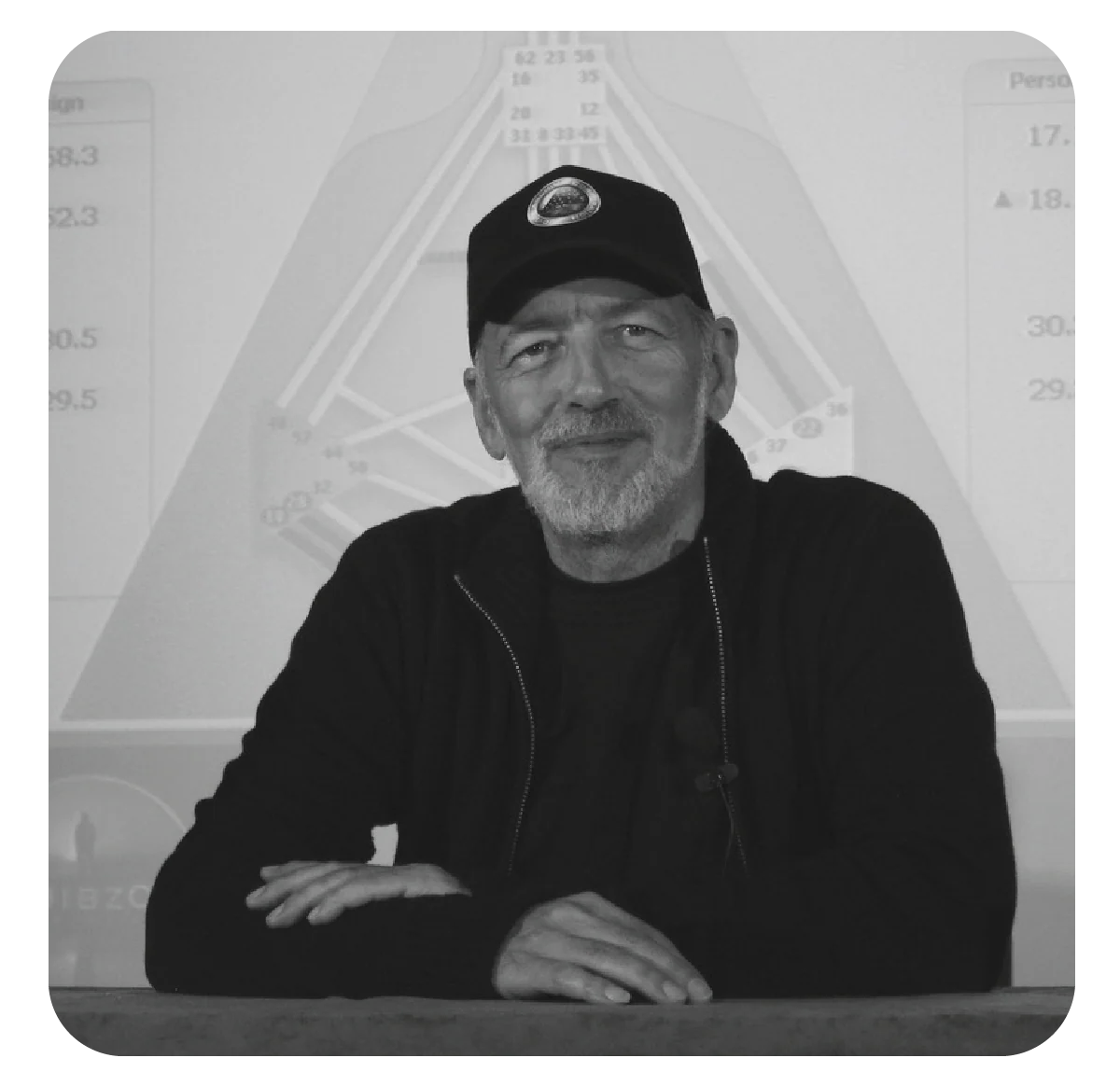
Founder, Ra Uru Hu

LEARN MORE ABOUT HUMAN DESIGN

The Michael System: 7 Soul Types

THE MICHAEL SYSTEM

Soul Types (or Seven Roles)

A Guide to Discovering Your Unique Type of Soul
Home> Soul Types>

Before each of us begins our incarnational cycle on the planet, we choose one of Seven Roles (or Soul Types) which serve as the blueprint for who we are, what special abilities we possess, and how we interact with others.

There are seven primary types of soul: Servers, Artisans, Warriors, Scholars, Sages, Priests, and Kings.

You can only be one soul type for an entire reincarnational journey. If, for example, you are initially assigned the role of a Sage, all your experiences will be shaped by that inherent Sageness.

The Soul Types as Archetypal Energies

Each soul type carries its own set of qualities, talents, and perspectives, contributing to the intricate mosaic of human diversity. Thus, In the human population, there are seven fundamental categories of people, representing different archetypal energies, and each with distinctive characteristics and a range of contributions that can be added to the collective human experience. To illustrate, consider this:

Imagine a bustling city with its diverse inhabitants and their respective roles. In this city, there are different types of individuals, each contributing their unique talents and skills to make the city function effectively. Just like a beehive, where bees of varying sizes and skills work together harmoniously, the city thrives due to the collaboration of different people.

In this analogy, there are architects and engineers who design and construct the city's buildings, ensuring they are structurally sound. Artists and performers bring creativity and beauty to the city through their work. Public servants, such as police officers and firefighters, safeguard the well-being of the community. Teachers and mentors impart knowledge and nurture the younger generation. Business leaders and entrepreneurs drive economic growth and innovation. Healthcare professionals provide care and healing. Finally, community organizers and social workers foster social cohesion and address societal challenges.

Each soul type then brings a unique contribution to the tapestry of human experience. By embracing our soul type, we unlock our true potential and live authentically, contributing to the greater good of ourselves and the world around us.

The Soul Types (or Seven Roles)


Server (Seeks the common good)

Servers express themselves through acts of service, nurturing, and caretaking, often putting the needs of others before their own. They are the nurturing souls, driven by a genuine desire to assist and support others. Servers alleviate suffering. They possess a strong sense of empathy and practicality, making them adept at providing comfort and practical help. Servers excel in caring for others, offering kindness, and creating a nurturing environment. They seek the well-being of all. Doctor, nurse, social worker, bureaucrat, waiter, waitress, housewife.

Highlights (from Yarbro): Servers seeks a person or institution to serve. They see the world as honored guests. The server, unlike all other roles, does not require the means of accomplishing a life-task. Being present on the physical plane is sufficient means for servers, which is one of the reasons that ser versin general incur less karma during their evolution

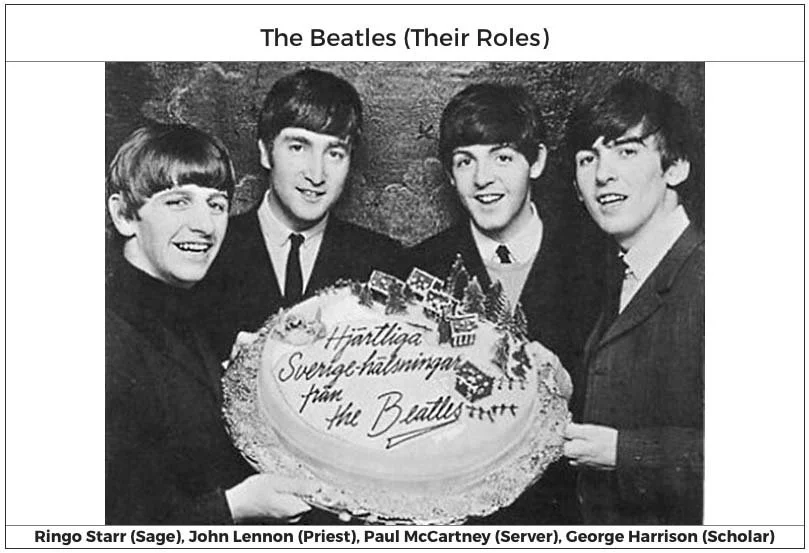
Famous Servers: Ingrid Bergman, Carol Mosely Braun, Pearl Buck, Doris Day, Sally Field, Martin Freeman, Al Gore, Juanita Gregg, Alfred Hitchcock, Caroline Kennedy, John Kerry, Dalai Lama, Ray Liotta, Elizabeth ll, William Macy, Greg Marcks, Paul McCartney, Mitch McConnell, Vladimir Putin, Eleanor Roosevelt, Susan Sarandon, Wesley Snipes, John Steinbeck, Kristen Stewart, James Stewart

Read more about theSERVER.


Artisan (Seeks creativity and the structure behind it)

Artisans express themselves through creativity and craftsmanship, bringing beauty and innovation into the world through various artistic mediums. They are creative souls, attuned to aesthetics, and possessing a natural gift for self-expression. They thrive in exploring various artistic mediums, generating unique ideas, and making creative connections. Artisans excel in bringing originality and inspiration via their artistic expressions. Artist, inventor, poet, writer, craftsman, actor, architect, engineer, mechanic, repairman, athlete.

Highlights from Yarbro: Brings to life freshness and originality. Views the world as their model. Artisans require a structure to work with. Artisans are always somewhat remote. For the Artisan, the automatic trap is that of the total preoccupation with structure and the resultant tendency to attempt to interrelate everything with everything else, as in the case of those who seek to equate the laws of physics with the perceptions of sociology with the geometric philosophies of architecture.

Famous Artisans: Woody Allen, David Bowie, Matthew Broderick, Emily Blunt, Hillary Clinton, Princess Diana, Leonardo DiCaprio, Clint Eastwood, Jimmy Fallon, Lady Gaga, Rupert Grint, Audrey Hepburn, Scarlett Johansson, Grace Kelly, Alanis Morissette, Brad Pitt, Natalie Portman, Robert Redford, Christina Ricci, Winona Ryder, Frank Sinatra, Meryl Streep, Audrey Tautou, Denzel Washington, Kate Winslet

Read more about theARTISAN.


Warrior (Seeks a challenge)

Warriors express themselves through action, courage, and protection, striving to overcome challenges and achieve their goals with determination. Warriors embody a courageous and action-oriented nature. They possess a keen awareness of their immediate surroundings, enabling them to navigate through challenges with strength and decisiveness. Warriors excel in leading, protecting, and taking direct action, making them effective problem-solvers and natural leaders in times of crisis.

Highlights (from Yarbro): The Warrior always requires a challenge. The warrior seeks to command and explore. Views the world as unconquered territory. The warrior takes charge through an instinctive drive. They are drawn to professions that encourage activity and provide challenges

Famous Warriors: Jessica Alba, Angela Bassett, Bono, Marlin Brando, Justin Chambers, Andrew Dice Clay, Judi Dench, Kat Dennings, Johnny Depp, Laurence Fishburne, Carrie Fisher, Jane Fonda, Harrison Ford, Kasie Hunt, Jessica Lange, Lea Michele, Paul Newman, Rosie O'Donnell, Sean Penn, Amy Schumer, Barbra Streisand, Oliver Stone, Kathleen Turner, Mario Van Peebles, Sigourney Weaver.

Read more about the WARRIOR


Scholar (Seeks knowledge)

Scholars express themselves through intellectual exploration, and the desire to understand and analyze the world around them. Scholars have an insatiable thirst for knowledge and a meticulous attention to detail. They possess an analytical and inquisitive nature, seeking to understand the workings of the world. Scholars excel in research, analysis, and accumulating specialized knowledge in their areas of interest. They are often keen observers and effective communicators of information. Scientist, scholar, writer, researcher, mathematician, professor.

Highlights (from Yarbro): The scholar always requires a study. The Scholar seeks knowledge and tends to regard life as an experiment. Scholars are prone to analyze rather than experience their lives, often in great, exhaustive detail. There are Scholars who have kept meticulous records of every aspect of their lives in order to ‘understand’ it in the catalog sense. This, of course, is not understanding: it is merely making lists.

Famous Scholars: Ben Affleck, Beethoven, Humphrey Bogart, Jeff Bridges, Sandra Bullock, Helena Bonham Carter, Deepak Chopra, Matt Dillon, Emily Dickinson, Robert Downey Jr., Albert Einstein, Linda Hamilton, Daryl Hannah, Salma Hayek, Holly Hunter, Jennifer Lawrence, Jennifer Jason Leigh, Abraham Lincoln, Daniel Radcliffe, Fred Rogers, William Shakespeare, Jon Stewart, Emma Thompson, Eckhart Tolle, John Wayne

Read more about theSCHOLAR.


Sage (Seeks communication in all things)

Sages express themselves through sheer charisma, storytelling, and engaging communication, captivating others with their wit, humor, and wisdom. They are expressive communicators and can seem bigger than life on stage. They have a gift for captivating others through their words, playful banter, and tall-tales. Sages excel in entertaining, teaching, and sharing their wisdom. They possess a natural ability to engage and inspire through their dynamic presence.. Entertainer, performer, actor, public speaker, teacher, broadcaster.

Highlights (from Yarbro): the Sage always requires ‘wisdom’ and someone to impart it to. The Sage will search for the unique thing, the Artisan will create it. They view the world as their audience. The Sage accumulates knowledge like a sea sponge. The Sage is normally an excellent extemporaneous orator and wishes to share all knowledge acquired with all those within hailing distance.

Famous Sages: Jennifer Aniston, Jack Black, Jim Carrey, Kristin Chenoweth, George Clooney, Bradley Cooper, Kevin Costner, Tom Cruise, Robert DeNiro, Tina Fey, Whoopi Goldberg, Tom Hanks, Dustin Hoffman, Samuel Jackson, Angelina Jolie, Catherine Zeta Jones, Keira Knightley, Madonna, Bill Mauer, Michael Moore, Bill Murray, Amy Poehler, Julia Roberts, J.K. Rowling, Oprah Winfrey.

Read more about the SAGE.


Priest (Seeks to serve the higher good)

Priests express themselves through spiritual guidance, compassion, and inspiring people to connect with their higher selves and pursue personal growth. Priests embody a deep sense of spirituality, good will, and service to others. They have a natural inclination to guide, counsel, and support individuals on their spiritual journeys. Priests excel in offering comfort, wisdom, and inspiration. They are often seen as beacons of light and conduits for higher truths. Pastor, minister, preacher, counselor, psychologist.

Highlights (from Yarbro): The Priest always requires a higher ideal and the means to impart it. Priests actively seeks this higher ideal or a being to serve. They view the world as their congregation. The Priest has a great need to save the world from itself as well as to find ways to bring others into the fold for their own protection.

Famous Priests: Amy Adams, Julie Andrews, Ellen Burstyn, Jessica Chastain, Jennifer Connelly, Anderson Cooper, Benedict Cumberbatch, Patrick Dempsey, Laura Dern, Megan Fox, Gandhi, Richard Gere, Cary Grant, Anne Hathaway, Jennifer Hewett, Hugh Jackman, John Lennon, James Mason, James McAvoy, Barack Obama, Daisy Ridley, Bernie Sanders, Christopher Walken, Emma Watson, Naomi Watts.

Read more about thePRIEST.


King (Seeks to lead, mandate)

Kings radiate a commanding presence and a sense of authority. They have a strong connection to responsibility and the well-being of those within their sphere of influence. Kings excel in providing stability, establishing order, and inspiring loyalty. They naturally assume leadership roles and make decisions that consider the welfare of others. Mayor, politician, statesman, governor, manager, overseer, steward, president, executive.

Highlights (from Yarbro): The king always requires a mandate and a kingdom to act upon it. The King will always seek to guide and rule. They view the world as their realm. The King is the Warrior exalted. These roles express themselves through leadership and the ability to influence motivation. The King takes charge through knowledge and inherent power.

Famous Kings: Christian Bale, Bela Bartok, Cate Blanchett, Yul Brynner, James Cameron, Sean Connery, Joan Crawford, Bette Davis, James Garner, Ryan Gosling. Katherine Hepburn, Steve Jobs, Tommy Lee Jones, Milla Jovovich, Klhoe Kardashian, JFK, Lucy Lawless, Jennifer Lopez, Berenice Marlohe, Anthony Robbins, Keri Russell, Patrick Stewart, Sharon Stone, Igor Stravinsky, Mark Walberg.

Read more about the KING.


The Soul Types & Their Core Values

Each soul type in the Michael teachings embodies distinct core values that guide their actions and perceptions. In addition, each essence role in the Michael teachings also exhibits specific strengths and challenges associated with their values.

Servers emphasize nurturing, caregiving, support, and service to others. Servers' emphasis on nurturing and support makes them compassionate caregivers and reliable allies, but they may neglect their own needs or become overly dependent on others.

Artisans value creativity, beauty, freedom, and innovation. Artisans' emphasis on creativity and innovation often leads to brilliant problem-solving and imaginative expression, but they may struggle with grounding themselves in reality and maintaining boundaries.

Warriors prioritize courage, strength, loyalty, and protection. Warriors' focus on courage and protection makes them natural leaders and defenders, yet they may sometimes struggle with aggression or impulsiveness.

Scholars emphasize knowledge, understanding, analysis, and learning. Scholars' dedication to knowledge and analysis grants them intellectual depth and insight, but they may face challenges in relating to emotions or practical matters.

Sages value communication, expression, humor, and entertainment. Sages' prioritization of communication and humor makes them engaging and charismatic, but they may struggle with depth or sincerity at times.

Priests prioritize spirituality, compassion, guidance, and service. Priests' commitment to spirituality and service enables them to inspire and uplift others, but they may grapple with dogmatism or self-righteousness.

Kings focus on leadership, authority, responsibility, and empowerment. Kings' focus on leadership and authority empowers them to take charge and enact change, but they may struggle with arrogance or control issues.

These values form the foundation of each role's identity and influence their approach to life and relationships.


Understanding Your Soul Type

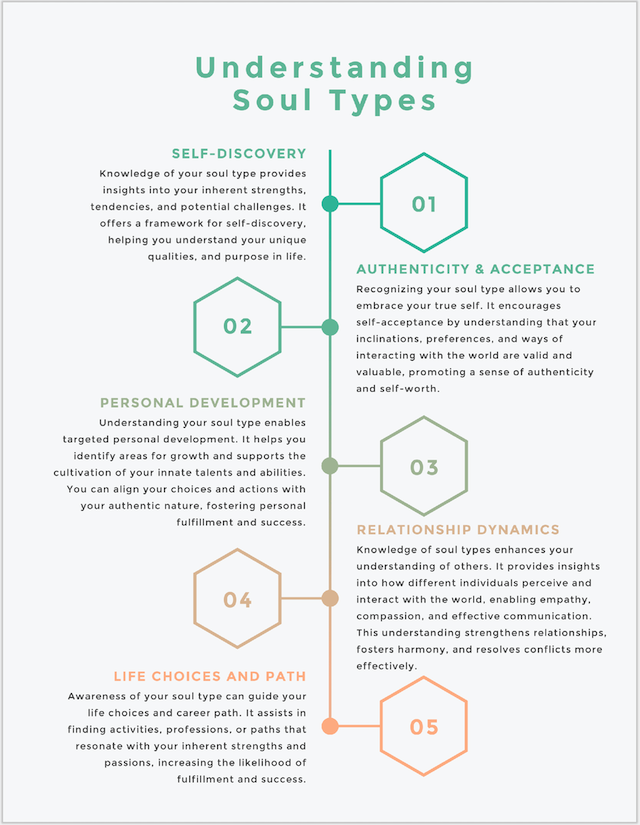
Understanding your soul type is like uncovering a hidden treasure within yourself. It provides profound insights into your unique soul archetype, empowering personal growth, self-acceptance, and the realization of your purpose in the world. It empowers you to make choices aligned with your essence, and foster harmonious relationships, ultimately leading to a more fulfilling life.

Why is This Important?

Because understanding your primary soul type (or role) provides you with valuable self-awareness and insight into your inherent qualities, strengths, and tendencies. This knowledge allows you to make conscious decisions and take actions that are in harmony with your authentic self.

By recognizing and embracing your role, you gain a deeper understanding of your natural inclinations, preferences, and core values. This awareness helps you align your choices, behaviors, and life path with your true essence. It enables you to make decisions that resonate with your authentic desires, passions, and aspirations, rather than being influenced solely by external factors or societal expectations.

When you make choices aligned with your essence, you are more likely to experience greater joy, fulfillment, and a sense of living in alignment with your true self.

Key Points:

  1. Unique Expression: Soul types represent unique expressions of consciousness, reflecting different energetic qualities, tendencies, and purposes.

  2. Individual Variation: Each type of soul has variations influenced by secondary roles and casting, leading to a diverse range of characteristics and traits within each primary role

  3. Purpose and Calling: Soul types offer insights into your life's purpose and calling, guiding you towards paths, careers, and activities that align with your true nature and bring fulfillment.

  4. Core Motivations: Each soul type has distinct core motivations that drive their actions, decisions, and desires. Recognizing your core motivations can bring clarity to your choices and help you align with what truly resonates with your soul.

  5. Gifts and Talents: Soul types come with inherent gifts, talents, and strengths. Exploring and embracing these gifts allows us to tap into our natural abilities and express them in ways that contribute to our personal fulfillment and the greater good.

  6. Celebration of Diversity: Embracing soul types celebrates the beautiful diversity of human expression. It encourages us to honor and appreciate the unique gifts, perspectives, and contributions that each soul type brings, fostering a more inclusive and harmonious world.

  7. Empowerment and Authenticity: Understanding your soul type empowers you to embrace your authentic self fully. It liberates you from societal expectations or comparisons and encourages you to honor your unique qualities, perspectives, and contributions to the world.

Distribution of Roles (or Soul Types)

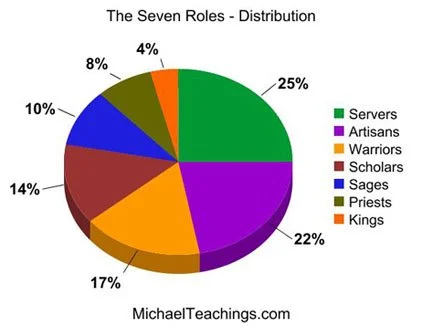
According to Yarbro, roughly twenty-five percent of the earth’s population (and the sentient population of the entire cosmos) are Servers, twenty-two percent are Artisans, seventeen percent are Warriors, fourteen percent are Scholars, ten percent are Sages, eight percent are Priests, and four percent are Kings.

This follows the order of most ordinal to most cardinal, with the neutral role, scholar, comprising about one-seventh of the population. So about sixty-four percent of the population has an ordinal role, and twenty-two percent has a cardinal role, with, again, fourteen percent having the neutral role, scholar. On any planet, there may be historical periods during which these percentages vary.

The Four Axes (or Universal Qualities)

The soul types are classified as being on one of four axes, or dominant universal qualities: INSPIRATION, EXPRESSION, ACTION, and ASSIMILATION (or neutral).

Servers and Priests are Inspirational roles (the inspiration axis relates to the inner world);

Artisans and Sages are Expressive roles (the expression axis relates to bringing the inner world into the outer);

Warriors and Kings are Action roles (the action axis relates to doing in the outer world), and

Scholars are the Assimilative role (the assimilation axis is neutral; it provides objectivity and a resource for the other axes).

The axes are fairly self-explanatory: a role or overleaf on the inspiration axis, for example, has an inspirational quality; in other words, it has to do with the inner world. (A definition of inspiration is "the act of drawing in.") The expression axis has to do with manifesting the inner world -- for example, communication; it is the bridge between inspiration and action. The action axis relates to the outer world, or doing. The assimilation axis is objective and neutral. It provides a resource for the other axes and helps integrate them.

The classification of soul types into four axes based on dominant universal qualities provides a valuable framework for understanding their inherent characteristics and orientations. Here are some additional insights and comments regarding the four axes:

  1. Inspiration Axis (Servers and Priests): The inspiration axis is associated with the inner world and the realm of spiritual and emotional experiences. Servers and Priests, as Inspirational roles, are attuned to this axis. They possess qualities that inspire and uplift others, drawing from a deep well of empathy, compassion, and spiritual connection. They often serve as guides, healers, and sources of inspiration, offering support and nurturing to others.

  2. Expression Axis (Artisans and Sages): The expression axis focuses on manifesting the inner world and bringing it into the outer realm. Artisans and Sages, as Expressive roles, excel in creatively expressing their thoughts, emotions, and unique perspectives. They are adept at communication, whether through art, storytelling, or captivating conversations. They serve as bridges between the inner realm of inspiration and the outer realm of action.

  3. Action Axis (Warriors and Kings): The action axis pertains to engaging with the outer world and the realm of doing. Warriors and Kings, as Action roles, embody qualities of leadership, decisiveness, and active participation in the world. They excel in taking direct action, making things happen, and implementing their visions. They are natural drivers of change and catalysts for progress.

  4. Assimilation Axis (Scholars): The assimilation axis is neutral and serves as a resource for the other axes. Scholars, as the Assimilative role, possess a natural inclination for gathering and integrating knowledge, experiences, and insights. They provide objectivity and a comprehensive understanding of the world, assisting in the assimilation of information across the other axes. Scholars contribute to the overall balance and harmony of the soul types by offering a grounded perspective and facilitating integration.

By recognizing the dominant universal qualities associated with each axis, we gain a deeper understanding of how soul types operate and interact in the world. It highlights the diverse roles individuals play in the human experience and offers insights into their primary modes of inspiration, expression, action, and assimilation.

Read More About The 7 Roles